
Ever looked in the mirror and felt like your skin’s “bounce” just isn’t bouncing anymore?
That’s where tallow steps in, not as another trendy cream, but as something your skin instantly recognizes and says, “Oh, this feels right.”
Let’s break down what really changes before and after using tallow for aging skin, without hype, just real biology, real results.
Before Tallow: What’s Happening Beneath the Skin
As we age, our skin slowly loses:
Natural lipids that keep it soft and flexible
Collagen that gives firmness
Moisture barrier strength, leading to dullness and fine lines
Most modern skincare adds synthetic oils that sit on your skin, not blend with it.
Result? A temporary glow that fades within hours.
If your skin feels tight after washing, flakes easily, or fine lines deepen in dry weather, that’s classic lipid depletion.
After Tallow: What Real Users Notice
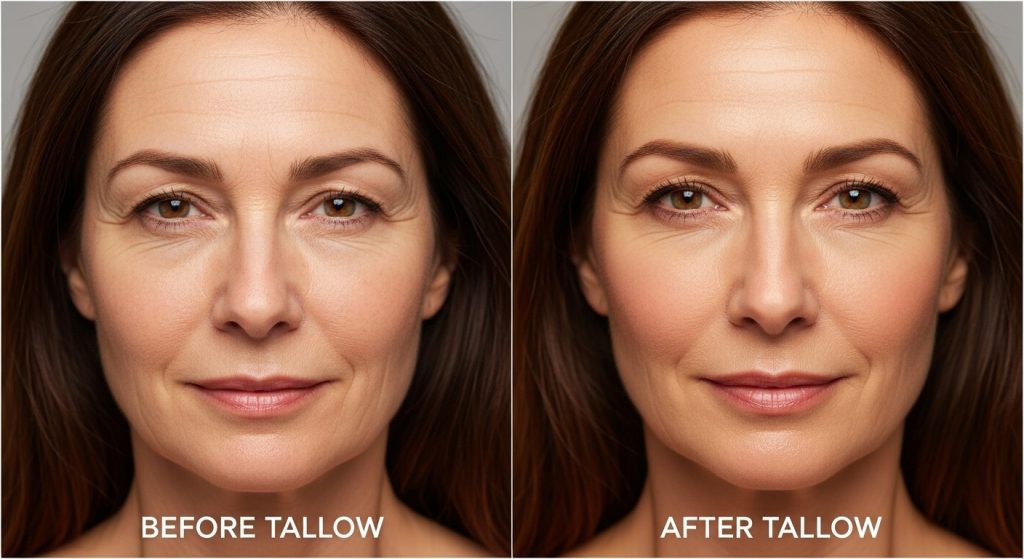
After using tallow consistently (2–4 weeks), most people notice:
Supple texture — the “tightness” eases off completely
Natural glow — not shiny, just balanced hydration
Reduced fine lines — especially around mouth and eyes
Softer, resilient barrier — makeup blends smoother, dryness disappears
Why? Because beef tallow mimics human sebum, the very thing your skin naturally produces when it’s healthy.
It fills in the lipid gaps that age has thinned out.
Why Tallow Works So Well for Mature Skin
Tallow is loaded with:
Vitamins A, D, E, and K — all fat-soluble antioxidants
Conjugated linoleic acid (CLA) — helps soothe inflammation
Palmitic and stearic acids — rebuild skin’s protective layer
Unlike plant oils that can oxidize quickly, tallow stays stable and compatible with your skin’s microbiome.
That’s why it doesn’t just “moisturize”, it restores.
Learn more about the science of balance in our Beef Tallow Skin Care Guide.
Aging Before and After | What You’ll Actually See
If you compare your skin before vs. after a few weeks of tallow use, here’s the difference most users describe:
| Skin Aspect | Before Tallow | After Tallow |
|---|---|---|
| Hydration | Feels dry or tight | Deeply moisturized & plump |
| Fine Lines | Visible, especially in low light | Softer and less pronounced |
| Tone | Uneven, dull | Even and natural glow |
| Texture | Rough or flaky | Smooth and velvety |
| Makeup Finish | Cracks or clings | Seamless, dewy base |
It’s not about looking 10 years younger overnight, it’s about restoring the healthy function your skin had before it started losing oils.
Boosting Results: Layering with Plantain Oil or Soap
You can amplify results by pairing tallow with simple natural companions:
Use Tallow and Plantain Oil for Skin for extra calming and brightening.
Cleanse with Tallow Soap to avoid stripping your barrier before moisturizing.
This combo keeps your skin in a balanced, repair-ready state 24/7.
How to Use Tallow for Anti-Aging Results
Start with a clean face (gentle tallow soap works best)
Warm a pea-sized amount of tallow balm between your fingers
Massage upward into damp skin, neck and under eyes too
Nighttime is prime time, skin regenerates fastest while you sleep
Want to DIY your balm? Follow our How to Make Pure Beef Tallow for Skin guide.
Concerned About Clogged Pores?
That’s a fair question, and one we get often. Good news: tallow is non-comedogenic when rendered and purified correctly. It absorbs fast and doesn’t block pores like synthetic fillers do. If you’re curious how it compares, read Will Beef Tallow Clog Pores?
Real Talk: What Makes “Before and After” Feel Real
Tallow doesn’t chase trends, it restores what your skin already knows how to do.
You’ll notice fewer layers in your routine, faster healing from dry spots, and that subtle bounce you thought was gone for good.
It’s not about changing your skin, it’s about helping it remember how to be itself again.
Quick Take
Quick Answer:
Before using tallow, aging skin often feels dry, tight, and uneven. After consistent use, most people notice softer texture, better hydration, reduced fine lines, and a healthy glow, thanks to tallow’s natural vitamins and fatty acids that mimic human sebum. It restores the lipid barrier instead of masking dryness.