
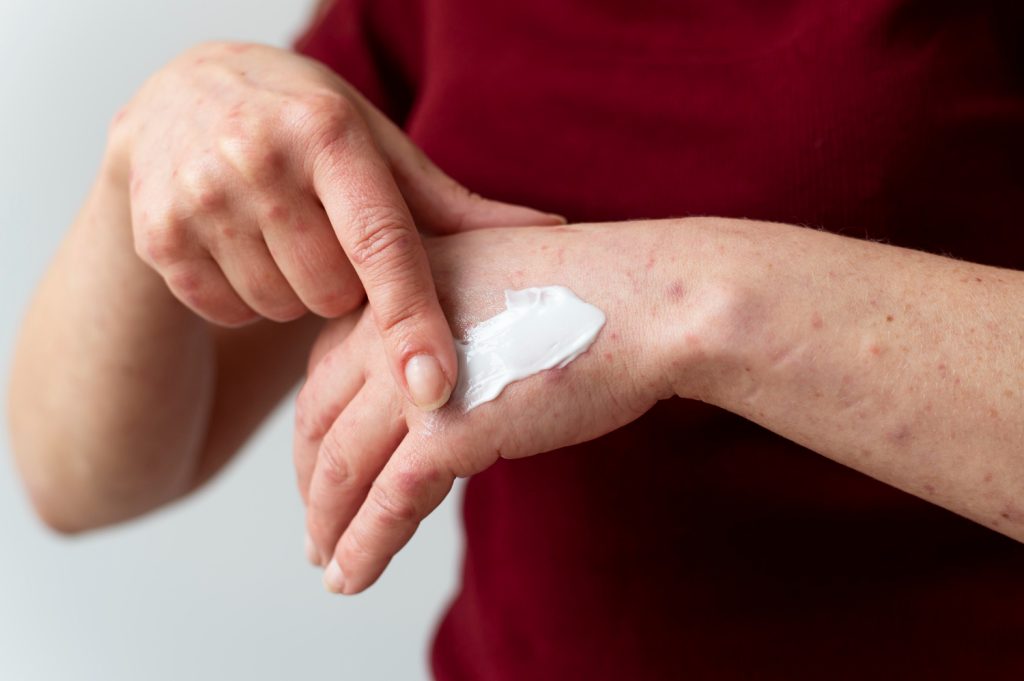
Inflammatory Skin Conditions
Eczema and psoriasis both involve immune system dysfunction that manifests as skin inflammation. Eczema typically results from an overactive immune response to irritants or allergens, while psoriasis involves accelerated skin cell production driven by autoimmune processes. Both conditions compromise the skin barrier and cause significant discomfort.
These conditions share common symptoms including redness, itching, flaking, and dry patches. The compromised skin barrier in both cases allows moisture to escape while letting irritants penetrate more easily. This creates a cycle where inflammation damages the barrier, and barrier damage worsens inflammation.
Traditional treatments often focus on suppressing inflammation through steroids or other medications. While these approaches provide relief, they don’t address the underlying barrier dysfunction. Supporting the barrier alongside medical treatment can improve outcomes and reduce dependence on medication.
Why Conventional Moisturizers Fall Short
Most commercial moisturizers contain water as their primary ingredient, along with emulsifiers to mix water and oils. These emulsifiers can irritate already-inflamed skin and further disrupt barrier function. The water content also requires preservatives that may trigger reactions in sensitive skin.
Many eczema and psoriasis sufferers find that commercial moisturizers provide only temporary relief. The products sit on the skin’s surface without penetrating to repair deeper damage. This surface-level approach means you need frequent reapplication throughout the day.
Fragrance and dyes in conventional products present additional problems. Even products marketed as gentle often contain these irritants. Reading ingredient labels becomes necessary, but the long lists of chemicals make it difficult to identify any possible triggers.
How Tallow Supports Barrier Repair
The fatty acid composition of tallow closely matches the lipids your skin uses to build its protective barrier. When you apply tallow to damaged skin, you provide exactly what the barrier needs to repair itself. This targeted support addresses one of the root causes of eczema and psoriasis symptoms.
Palmitic acid and stearic acid, both abundant in tallow, integrate directly into the stratum corneum. These fatty acids fill gaps between skin cells, reducing water loss and preventing irritant penetration. The immediate effect is less dryness and reduced sensitivity.
Oleic acid in tallow penetrates deeply to deliver moisture to lower skin layers. This deep hydration differs from surface moisturization and provides longer-lasting relief. Many users report that tallow keeps their skin comfortable for hours longer than conventional products.
Anti-Inflammatory Properties of Grass-Fed Tallow
Grass-fed tallow contains conjugated linoleic acid, which reduces inflammation through multiple mechanisms. CLA modulates immune responses and decreases the production of inflammatory compounds. This natural anti-inflammatory action complements medical treatments without causing side effects.
The omega-3 fatty acids in grass-fed tallow also contribute to reduced inflammation. These essential fats help balance the omega-6 to omega-3 ratio in skin cells. Modern diets often contain excessive omega-6, which promotes inflammation, so topical omega-3 application helps restore balance.
Vitamin E in tallow acts as an antioxidant that protects inflamed skin from additional damage. Free radicals increase during inflammatory processes, and vitamin E neutralizes these harmful molecules before they cause cellular damage. This protection allows skin to heal more efficiently.
Vitamin A & Skin Cell Function
The vitamin A in grass-fed tallow supports normal skin cell differentiation and turnover. In psoriasis, cells reproduce too quickly, leading to thick, scaly patches. While vitamin A in tallow won’t stop this process entirely, it may help moderate cell production and improve skin texture.
For eczema, vitamin A supports the formation of healthy new skin cells to replace damaged ones. Proper cell differentiation ensures that new cells form tight junctions with neighboring cells, strengthening the overall barrier structure.
Unlike synthetic retinoids that can irritate sensitive skin, the vitamin A in tallow provides gentler support. The fat-soluble form absorbs gradually, reducing the risk of irritation while still delivering benefits.
Application Techniques for Maximum Benefit
Apply tallow to slightly damp skin when possible. The moisture helps the tallow spread more easily and may increase absorption. After bathing or washing affected areas, pat skin partially dry and immediately apply tallow while some water remains.
Use gentle pressing motions rather than rubbing when applying tallow to inflamed areas. Rubbing can irritate sensitive skin and worsen itching. Pressing the product into skin provides adequate coverage without causing friction.
Apply tallow multiple times daily during flare-ups. Unlike medications that have dosing limits, you can reapply tallow whenever skin feels dry or uncomfortable. Many people find that applying after each hand washing prevents the dryness that triggers itching.
Combining Tallow with Medical Treatments
Tallow can work alongside prescription treatments for eczema and psoriasis. Apply medicated creams first, allowing them to absorb for several minutes before applying tallow over top. The tallow seals in the medication and provides additional barrier support.
Some topical medications cause dryness as a side effect. Using tallow on surrounding healthy skin can prevent medication-related dryness from spreading. This approach allows you to continue effective treatments without the discomfort they sometimes cause.
Discuss any new skincare products with your healthcare provider, especially if you use prescription treatments. While tallow rarely causes problems, your provider can help you integrate it into your existing treatment plan safely.
Managing Itch & Preventing Scratching
Itching is one of the most challenging aspects of eczema and psoriasis. The moisture and barrier support tallow provides can significantly reduce itch intensity. Many users report that consistent tallow application decreases their urge to scratch.
Keep tallow easily accessible so you can apply it immediately when itching starts. Quick application often prevents minor itching from escalating to intense discomfort. Some people keep small containers in multiple locations for convenient access.
The cooling sensation of tallow can provide immediate itch relief. Some users refrigerate their tallow for extra cooling effects. The cold temperature combined with barrier support offers dual-action relief during difficult moments.
Addressing Cracking & Bleeding
Severe eczema and psoriasis can cause skin to crack and bleed, particularly on hands, feet, and joints. These cracks are painful and create entry points for infection. Tallow’s emollient properties help soften hardened skin and prevent crack formation.
For existing cracks, apply tallow generously and cover with bandages overnight. This occlusive approach traps moisture and allows deeper healing. Many people see significant improvement in crack healing within a few days of this intensive treatment.
The antimicrobial properties in tallow may help protect minor cracks from infection. While tallow shouldn’t replace proper wound care, it provides some natural protection for superficial breaks in skin.
Choosing the Right Tallow Product
Look for tallow from grass-fed, organically raised animals. The higher nutrient content in grass-fed tallow provides more anti-inflammatory and healing benefits. The cleaner fat also reduces the risk of contamination with hormones or antibiotics.
Some tallow products contain added ingredients like essential oils or herbs. While these additions can provide benefits, they also increase the risk of reactions in very sensitive skin. Those with severe eczema or psoriasis often do best with pure tallow initially.
Test new products on a small area before applying to large or severely affected areas. Even gentle products can cause reactions in extremely compromised skin. A patch test on your inner forearm for 48 hours helps identify possible problems.
Long-Term Management Strategies
Consistent daily use of tallow often provides better results than sporadic application during flare-ups. Regular use maintains barrier function, possibly reducing the frequency and severity of inflammatory episodes. Think of it as preventive care rather than just symptom management.
Track your symptoms and tallow usage to identify patterns. Some people notice that their skin needs more support during stress, seasonal changes, or after certain activities. Knowing your triggers allows you to increase tallow application proactively.
Many people find they can reduce their reliance on medicated products after several months of regular tallow use. The improved barrier function means skin can maintain itself better with less medical intervention. Always work with your healthcare provider when adjusting medication use.
When to Seek Additional Help
Tallow provides excellent support for eczema and psoriasis, but severe cases require medical supervision. If you experience widespread inflammation, severe pain, signs of infection, or symptoms that interfere with daily life, consult a healthcare provider.
Sudden worsening of symptoms despite regular tallow use may indicate an allergic reaction, infection, or other complication. Don’t assume all skin problems will respond to natural care alone. Medical evaluation ensures you receive appropriate treatment for your specific situation.
Some people have true allergies to beef products that extend to topical tallow use. While rare, these allergies require avoiding tallow entirely. If you develop hives, severe itching, or swelling after application, discontinue use and seek medical advice.