
Quick Answer:
Pure beef tallow for skin is made by gently melting clean, grass-fed beef fat over low heat until it turns into a clear liquid oil. The oil is strained, cooled, and solidified into a smooth, nutrient-rich balm that deeply moisturizes and supports skin health without any synthetic ingredients.
What Is Beef Tallow and Why It’s So Good for Skin
Beef tallow is simply rendered beef fat traditionally used for cooking, but now celebrated in skincare for its incredible similarity to our skin’s natural oils.
When melted and purified properly, tallow becomes a vitamin-packed moisturizer loaded with A, D, E, and K, all of which play vital roles in repairing, softening, and protecting your skin.
If you want to understand how beef tallow supports your skin barrier and overall skin health, explore our Beef Tallow Skin Care Guide.
Choosing the Right Fat for Rendering
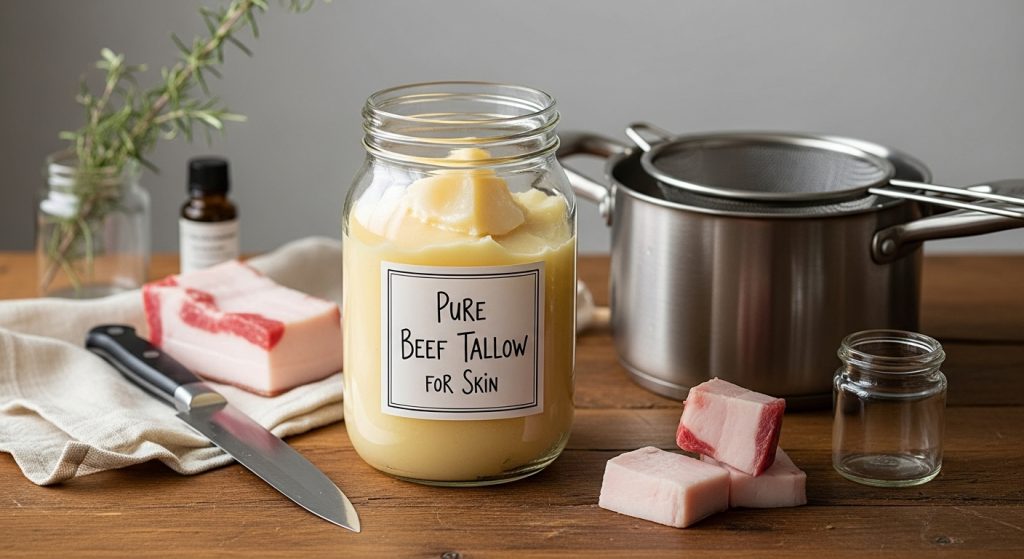
The purity of your tallow depends on the quality of fat you start with.
Best choice: Grass-fed beef suet (the firm, white fat around the kidneys).
It contains the highest nutrient concentration.
It produces a neutral, clean-smelling final product.
Avoid processed or cooked fat trimmings they can give your tallow a strong odor and reduce its shelf life.
Pro tip: Ask your local butcher for “grass-fed suet” it’s affordable, nutrient-dense, and ideal for skincare-grade tallow.
Step-by-Step: How to Make Pure Beef Tallow for Skin
Step 1: Prepare the Fat
Trim away any bits of meat, blood, or membranes. Chop the fat into small cubes or pulse it in a food processor the smaller the pieces, the faster and cleaner it melts.
Step 2: Slow Render
Place the fat in a heavy pot, slow cooker, or oven-safe pan.
Keep the heat low (around 200°F / 93°C).
Stir occasionally to prevent sticking.
Over 1–2 hours, the fat slowly releases clear oil while the solids turn crisp and golden.
Never rush the process. Slow rendering protects the natural vitamins and ensures a mild, skin-safe scent.
Step 3: Strain and Filter
Once most of the fat has melted, carefully pour it through a cheesecloth or fine strainer into a heat-safe bowl or jar.
This step removes any small impurities or cooked particles.
For ultra-smooth skincare tallow, filter it twice while warm the extra pass ensures a silky, clean texture.
Step 4: Cool and Store
Let the filtered oil sit at room temperature until it cools and turns creamy white.
Store your pure tallow in a clean glass jar with a tight lid.
It will stay fresh for 6 to 12 months if kept in a cool, dry place or even longer in the refrigerator.
Why Pure Rendered Tallow Is Perfect for Skin
Pure beef tallow is more than just natural fat it’s skin nourishment in its simplest form.
Here’s why it works so well:
Its fatty acid profile mirrors human sebum, helping restore balance to dry or oily skin.
Vitamins A, D, E, and K support cell renewal, barrier repair, and elasticity.
It locks in moisture without clogging pores.
Naturally antioxidant and soothing, ideal for sensitive or mature skin.
For more on how tallow benefits the skin’s texture and moisture balance, see our guide on Why Tallow Soap Is Good for Your Skin.
How to Purify Tallow for Skin
If you want your tallow to be extra pure and nearly scent-free:
Melt it again gently.
Add an equal amount of water and simmer for 10–15 minutes.
Let it cool, the tallow will solidify on top.
Lift it off, discard the water below, and re-melt once more before storing.
This process removes trace impurities and creates a smoother, cleaner tallow suitable for balms, soaps, or facial moisturizers.
Using Homemade Beef Tallow for Skin
Your pure tallow can be used as-is or customized.
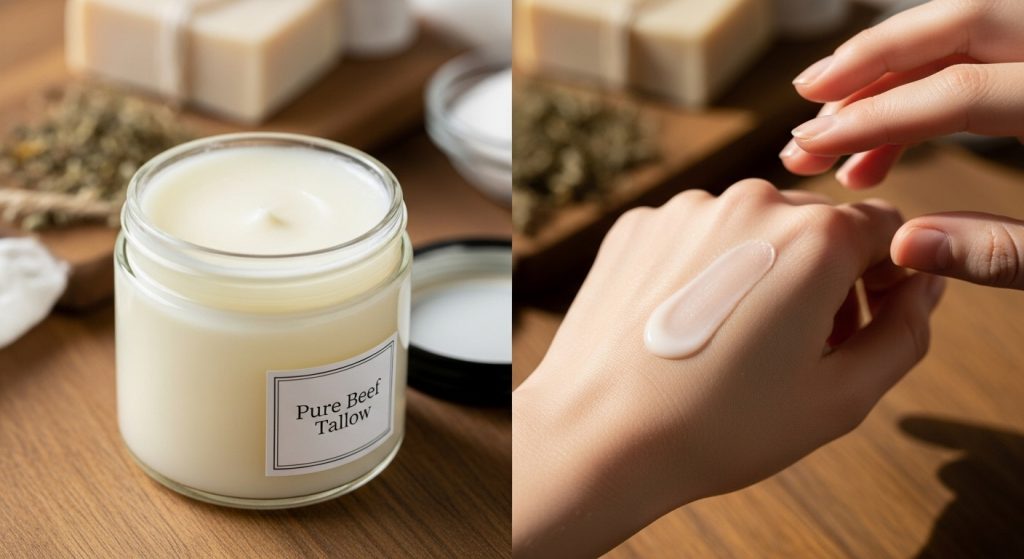
As a daily moisturizer: Massage a small amount into slightly damp skin.
As a balm base: Blend with light oils like plantain or jojoba for extra softness (see Tallow and Plantain Oil for Skin).
For dry hands or feet: Apply before bed and cover overnight.
In DIY soap recipes: It adds a creamy, conditioning lather.
A small dab goes a long way it melts into the skin naturally and leaves no greasy film.
Common Questions About Making Tallow for Skin
Can I use any beef fat to make tallow for skin?
Grass-fed suet is best. It’s richer in nutrients and has a cleaner scent.
Does beef tallow smell bad?
If rendered slowly and filtered well, it has only a mild, natural aroma that fades after cooling.
How long does homemade tallow last?
Pure tallow lasts up to a year at room temperature, even longer if refrigerated.
Can I mix essential oils into tallow?
Yes, gentle oils like lavender or chamomile complement its soothing properties.
Is beef tallow good for sensitive skin?
Absolutely. It’s gentle, barrier-repairing, and naturally anti-inflammatory.
Final Takeaway
Making your own pure beef tallow for skin is simple, sustainable, and deeply rewarding.
It connects you with a skincare tradition that’s as old as nature itself one that nourishes without chemicals, hydrates without residue, and strengthens your skin from within.
Whether you use it as a balm, a soap base, or a simple daily moisturizer, tallow delivers real, lasting results the kind your skin will actually feel.